
The story behind November 11.
A five-lesson unit study that follows one morning in 1918 all the way to the holiday we keep today: the armistice, the red poppy, the Tomb of the Unknown Soldier, and the Alabama veteran who talked a president into changing the name.
Instant download. 79 pages, grades K–6, audio included.
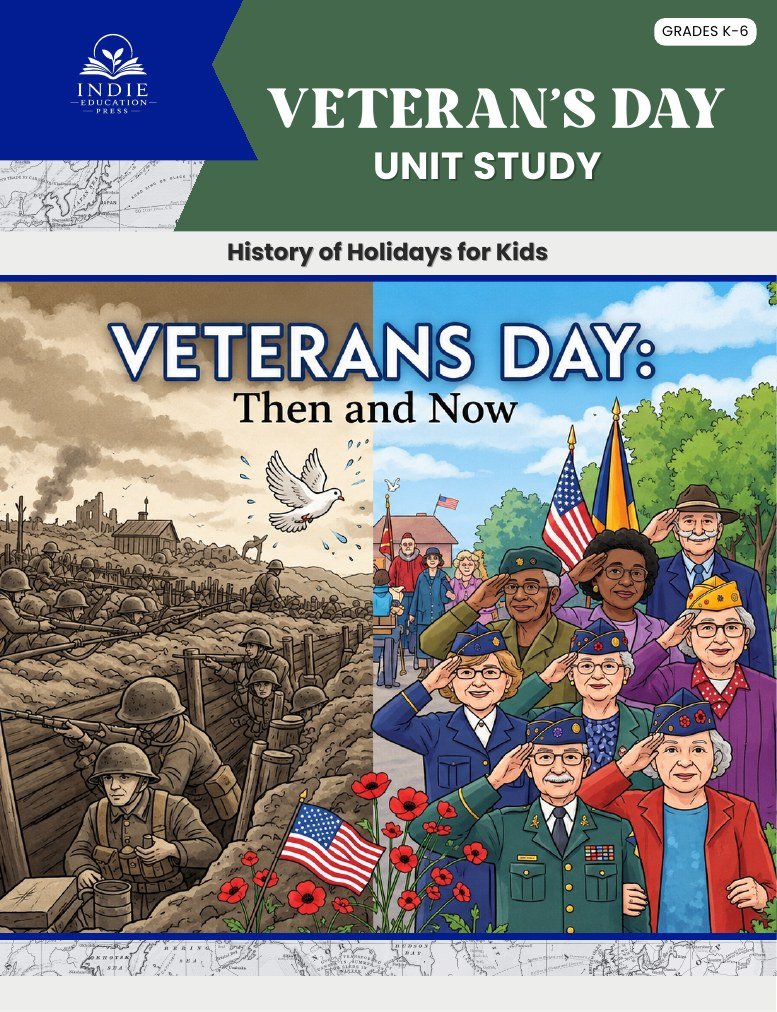
Veterans Day is easy to honor and hard to explain.
Most children know the day means thank you. Far fewer know it started as Armistice Day, or that a World War II veteran from Birmingham spent eight years persuading Congress to rename it, or that for a few odd years in the 1970s it fell in October. This unit tells that story in order, one lesson at a time.
It also shows students where the story comes from. They read the actual words of presidents, lawmakers, and veterans, and a Be a Historian activity puts the holiday’s own founding documents in front of them so they can answer “how do we know?” for themselves.
Veteran’s Day: Then and Now
Read one lesson a day or one a week, aloud or along with the audio. Here is exactly what you’ll cover:
- The Guns of World War I Fell Silent at the Eleventh Hour of the Eleventh Day: why the war was fought, how the United States joined it, and how an agreement signed in a railroad car ended the fighting on November 11, 1918.
- Americans Created Armistice Day to Remember the Fallen and to Hope for Peace: the first Armistice Days, from moments of silence and the Tomb of the Unknown Soldier to Moina Michael and the red poppy, and how November 11 became a legal holiday in 1938.
- After World War II, a Veteran From Alabama Helped Turn Armistice Day Into Veterans Day: how Raymond Weeks, Congress, and President Eisenhower changed the holiday in 1954, what other countries call the day, and the years it briefly moved to October.
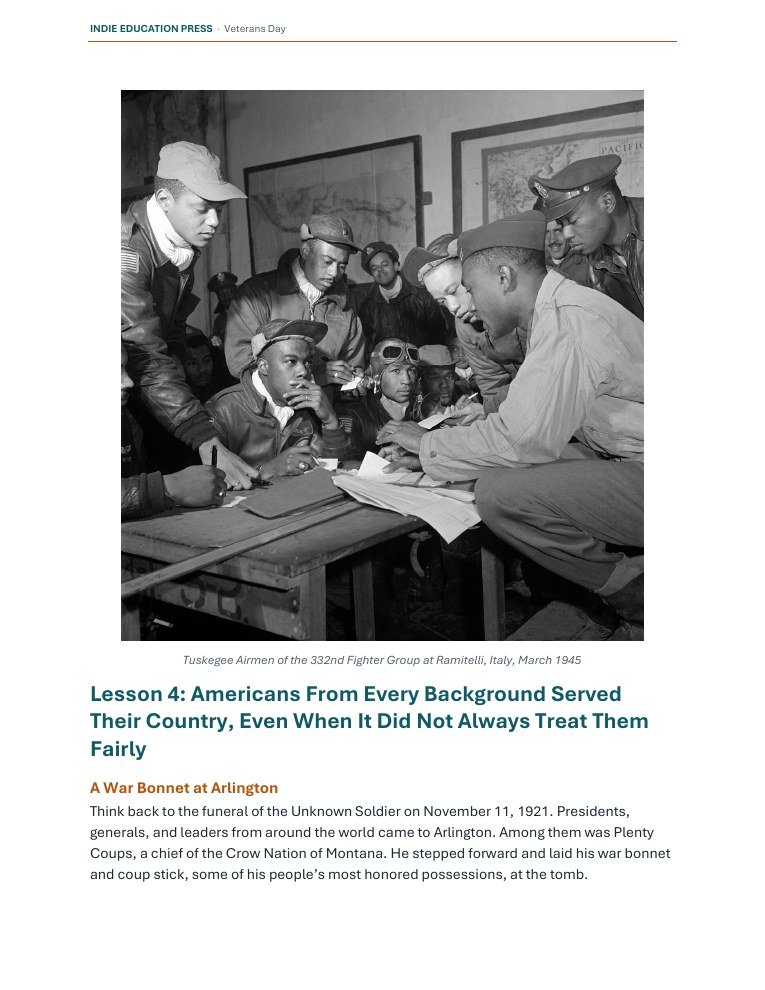
- Americans From Every Background Served Their Country, Even When It Did Not Always Treat Them Fairly: Native American, Black, Latino, Japanese American, and women veterans, and how their service helped change the country.
- Americans Have Found Many Ways to Honor the People Who Served: the Vietnam Veterans Memorial, veterans’ organizations, Honor Flights, the Veterans History Project, and how the day is observed now.
Every lesson ends with Vocabulary to Learn, Key Dates to Add to Your Timeline, and Questions to Think About.
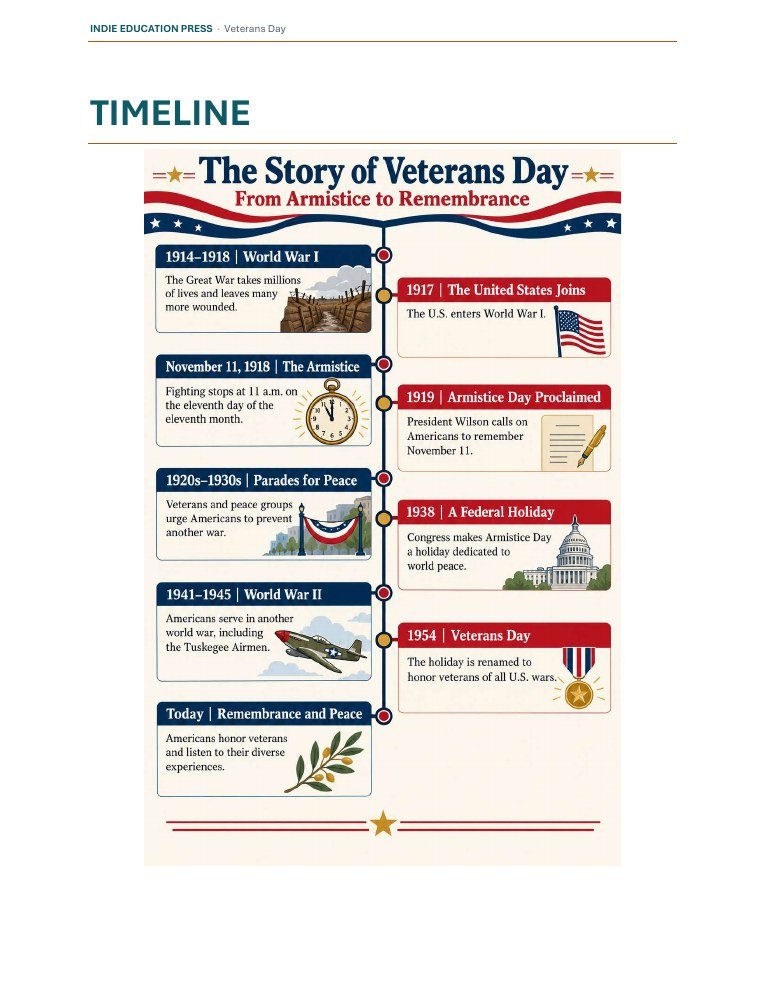
Plus: an illustrated timeline, a full list of timeline dates to build as the unit’s hands-on project, discussion questions, two Be a Historian activities including an Interview a Veteran project, a quiz with an answer key, a resource list of books and videos, full sources, and the activity pack and lapbook.
A look inside
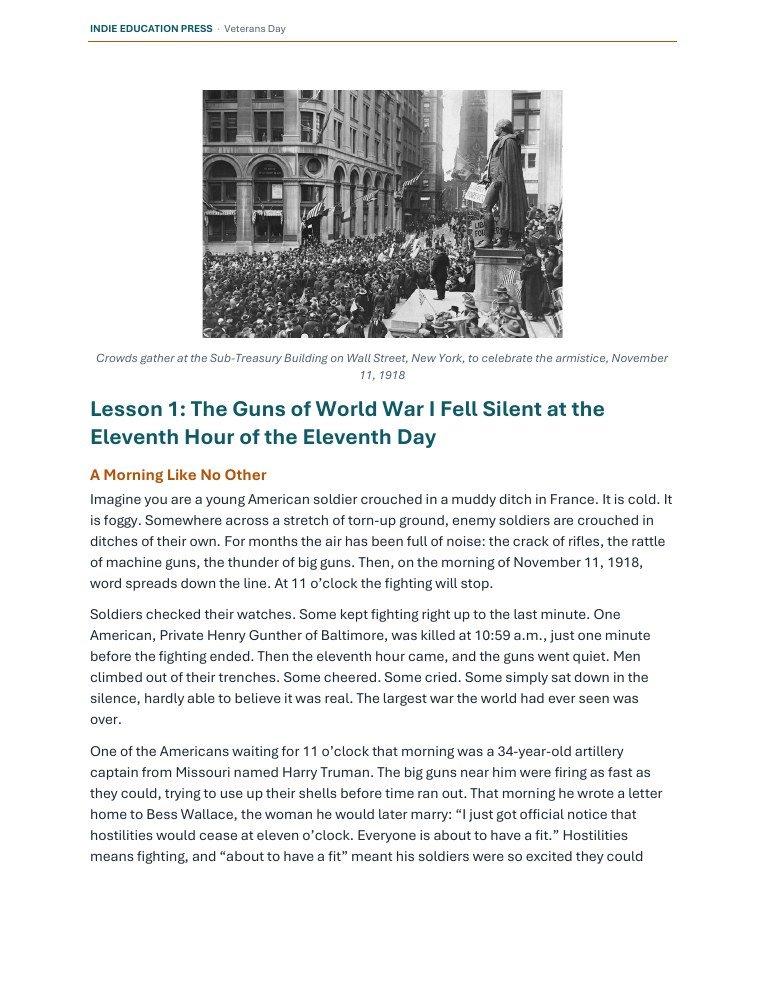
An illustrated timeline, historical photographs with captions and sources, and readings written to be read aloud.
Hands-on learning, built in
The unit comes with a complete activity pack and lapbook. Use it whole, or pull out the pieces that fit your week. It also works as a “binder builder” if you collect holiday units through the year.
- Lapbook with a vocabulary pocket and twelve illustrated cut-out vocabulary cards
- “Where in the World?” map page: label the allies, the Central Powers, and where the armistice was signed
- Veterans Day symbols flap book, and a “What Do You Think?” flap book
- “Why We Celebrate” booklet to cut out and assemble
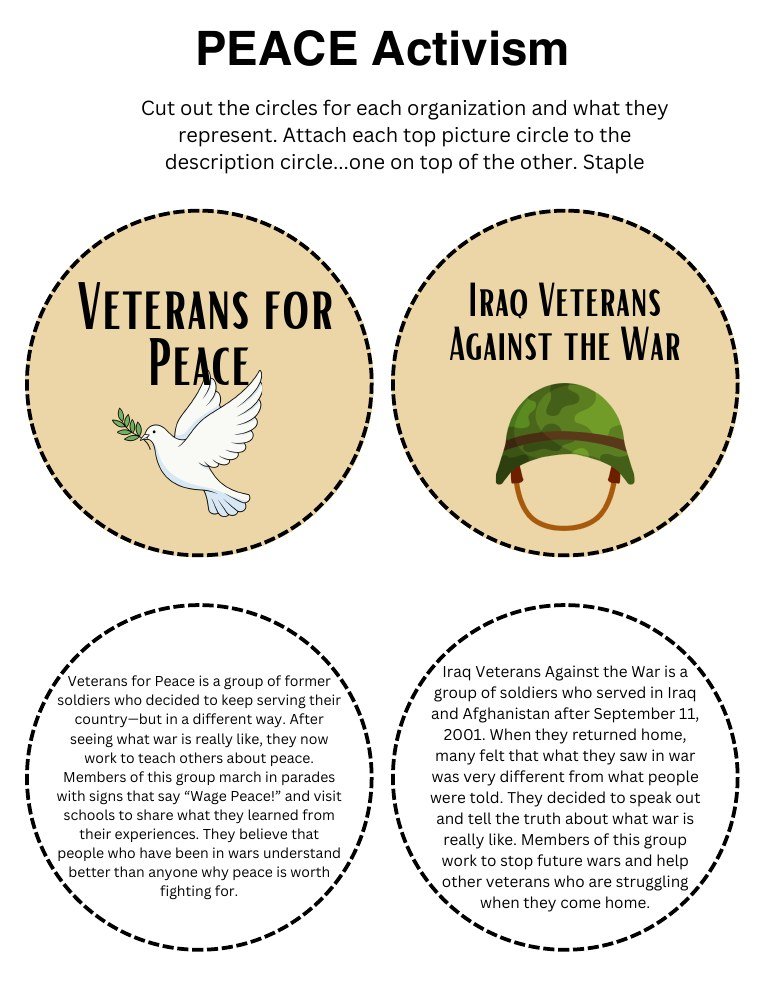
- Peace activism wheels: Veterans for Peace, Iraq Veterans Against the War, and the Tuskegee Airmen
- Timeline activity with cut-and-paste dated cards
- Writing prompts, and a multiple choice quiz with an answer key
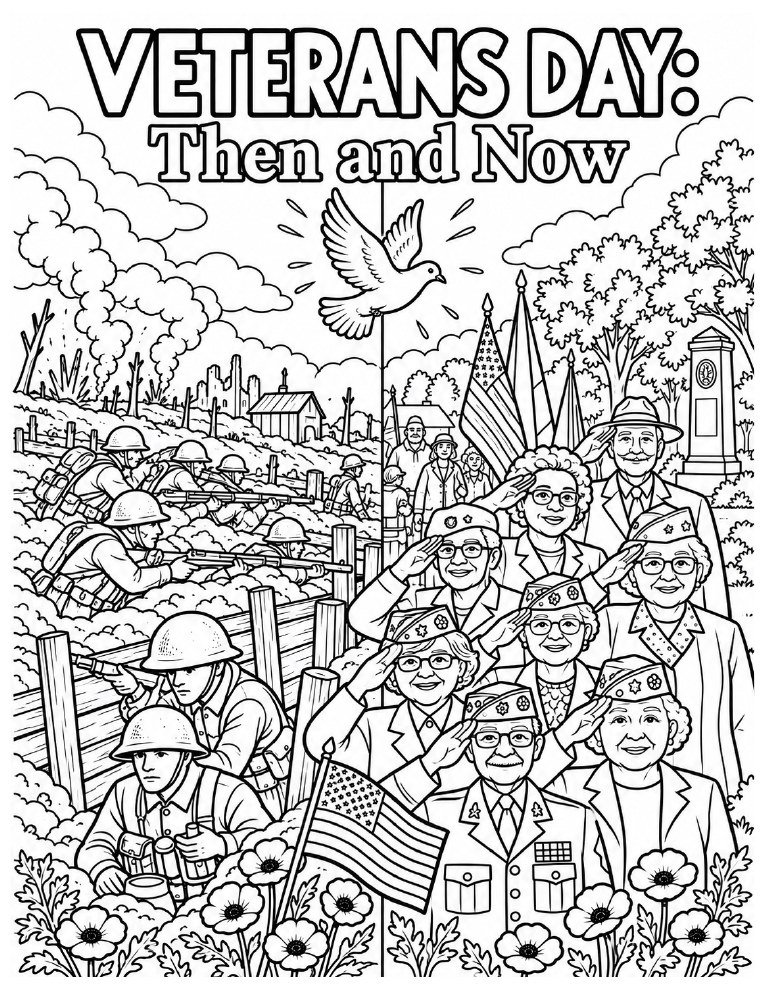
- Coloring pages and two word searches
Inside the lapbook and activity pack
Real pages from the unit. Print them, then cut, fold, color, and assemble.
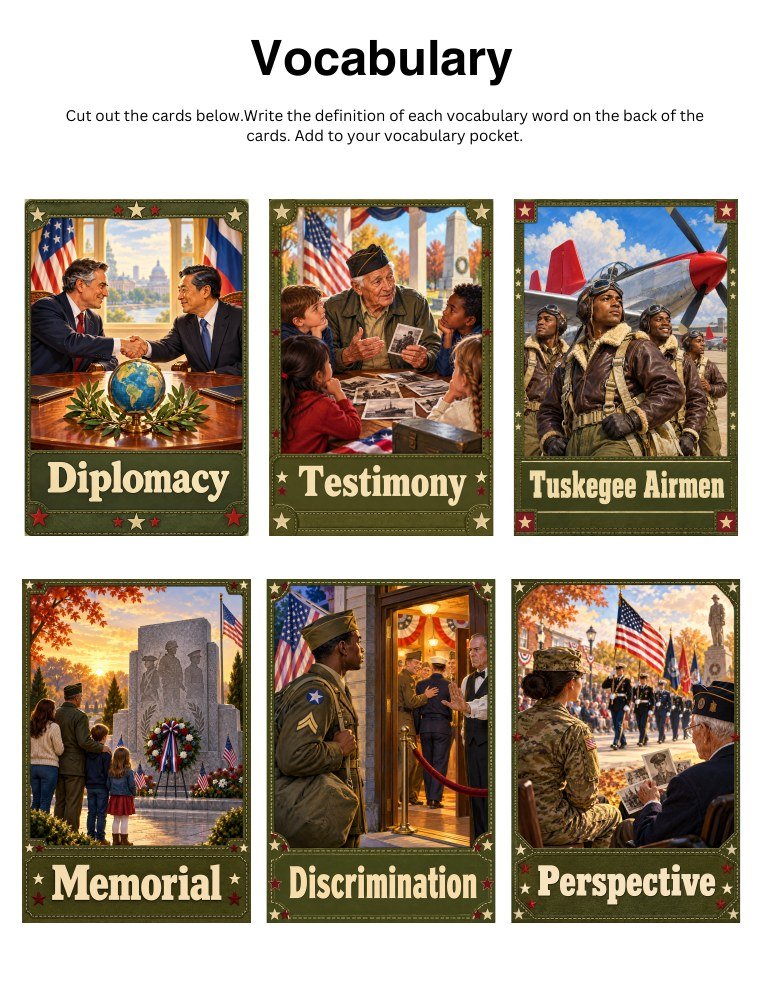
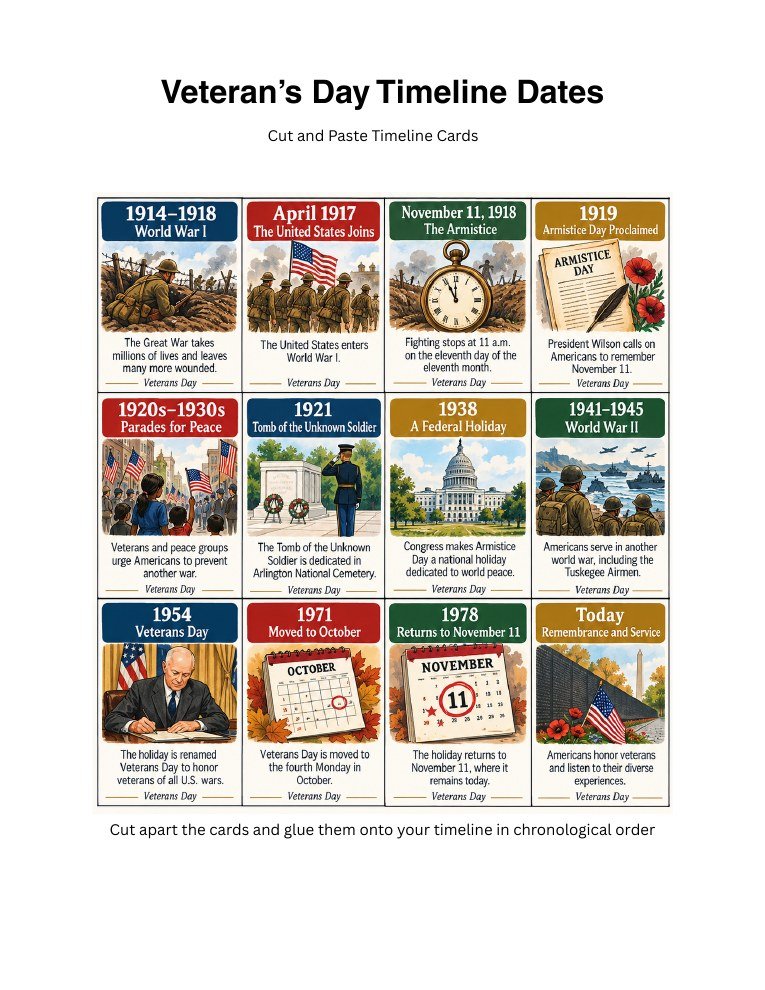
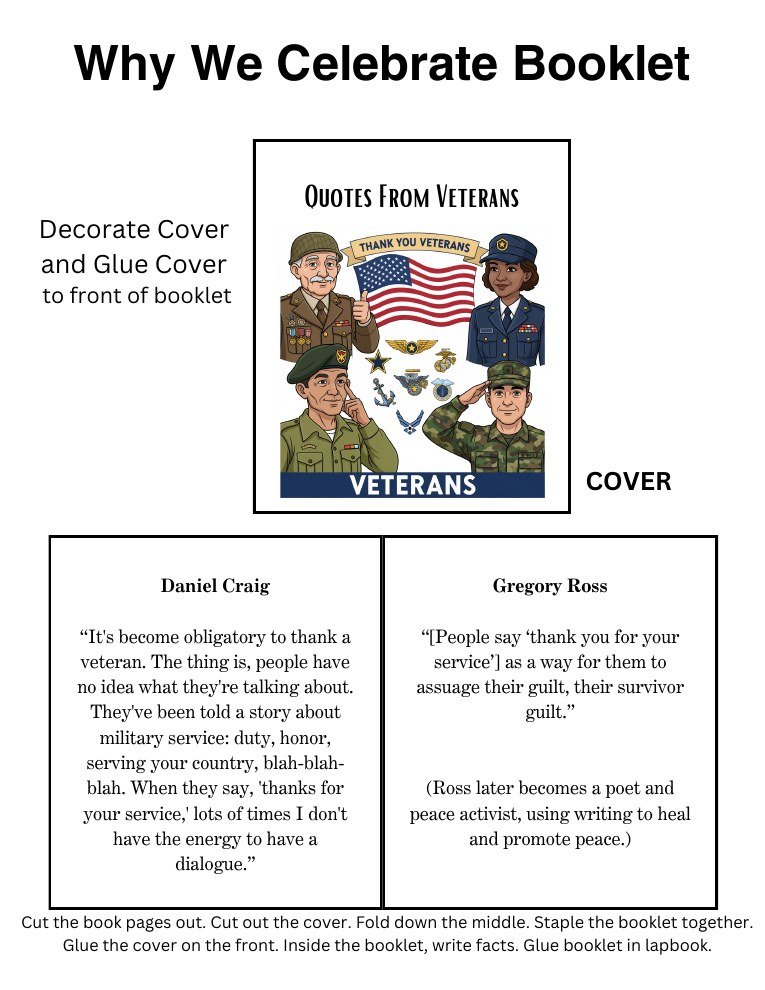
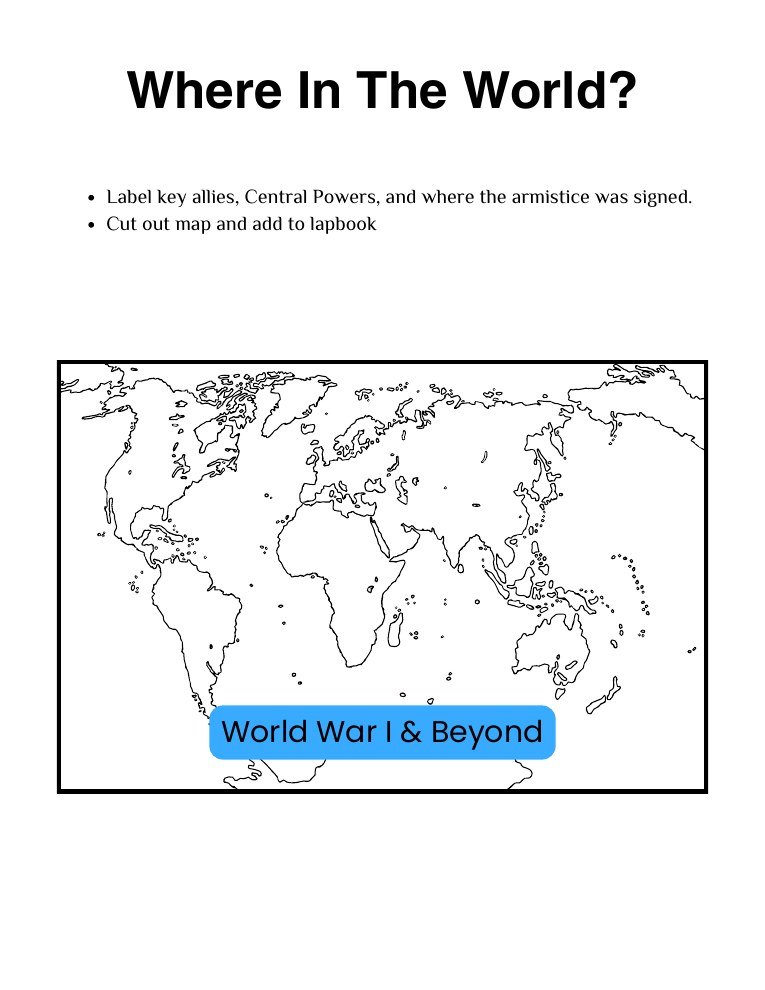
Every lesson comes with audio
Listen in podcast form, or read along. Great for car rides, little listeners, and kids who learn best by ear.
A note for parents
This unit is about a war, so it talks plainly about death and loss. Lesson 1 describes trench warfare and the scale of the casualties, and Lesson 2 visits the Tomb of the Unknown Soldier and the graves that gave us the red poppy. Lesson 4 is honest about the discrimination Native American, Black, Latino, and Japanese American service members faced at home while serving their country.
It is told as history rather than as spectacle: no graphic detail, and no position taken for or against the military. Lesson 5 notes that many veterans are glad to hear “thank you for your service” and that others feel differently, which makes a good conversation to have before the Interview a Veteran project.
Get the unit for $9.99
$14.99 Sale ends November 11
79 pages · 5 lessons with audio · lapbook and activity pack · grades K–6
Get the Veterans Day unitQuestions
Grades K–6. Middle schoolers often enjoy the activity pages and the Be a Historian work too.
Five lessons. Read one a day for a week, or one a week for five weeks, then build the timeline and do the quiz.
The unit includes a single-family license covering all the children in your household. Co-ops, microschools, schools, and other groups should purchase one copy per participating family, or contact Indie Ed Press about group licensing.
It’s an instant download. As soon as you check out, the unit is ready, with a link to the lesson audio inside.
November 11. After that, the unit returns to its regular price of $14.99.